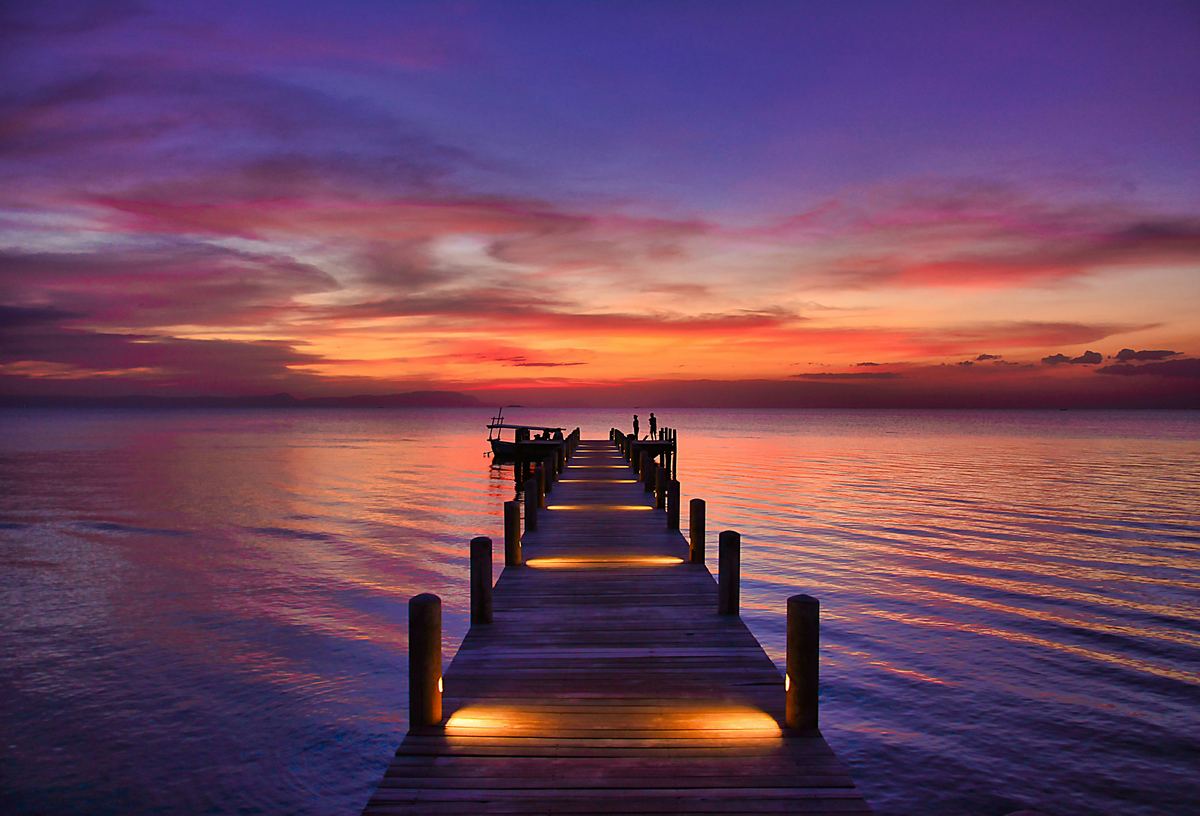
Kep sunset pier Cambodia
← Back to Khmer Side

Kep — The Town
That Refused to Hurry

Cambodia's smallest province. A fishing market that smells of pepper and brine. Colonial ruins slowly swallowed by jungle. The kind of place you come for a night and stay for a week. Kep is what the rest of Southeast Asia used to be before everyone found out about it.

Kep sits on Cambodia's southern coast, 25 kilometres east of Kampot and 175 kilometres from Phnom Penh. It takes about three hours by bus or two by private car — and when you arrive, you'll understand immediately why people who discover it rarely regret the detour.

The town was built as a French colonial resort in 1908, designed as an escape for Phnom Penh's elite. At its peak, it was lined with elegant villas and the kind of architectural confidence that colonial France exported everywhere it went. Then the Khmer Rouge came. The villas were abandoned, looted, burned or simply left to the jungle. What remains today is one of the most hauntingly beautiful landscapes in Southeast Asia — ghost mansions draped in strangler figs, wide avenues leading nowhere, a sea that has no memory of any of it.

"The ruins don't feel like tragedy here. They feel like the jungle winning, slowly, the way it always does."

The Crab Market

This is why most people come to Kep, and it delivers. The Crab Market is a string of floating wooden restaurants built on stilts over the sea, run mostly by women who have been here for decades. You point at the crabs — kept alive in submerged cages — pay by the kilo, and they cook them to order.

The classic preparation is blue crab stir-fried with fresh Kampot pepper, garlic, and a splash of fish sauce. The combination is extraordinary: the sweetness of fresh crab against the floral heat of green pepper. Budget around $8–15 for a full crab meal with rice and a cold Angkor. Go before noon or after 2pm to avoid the tour bus crowd.
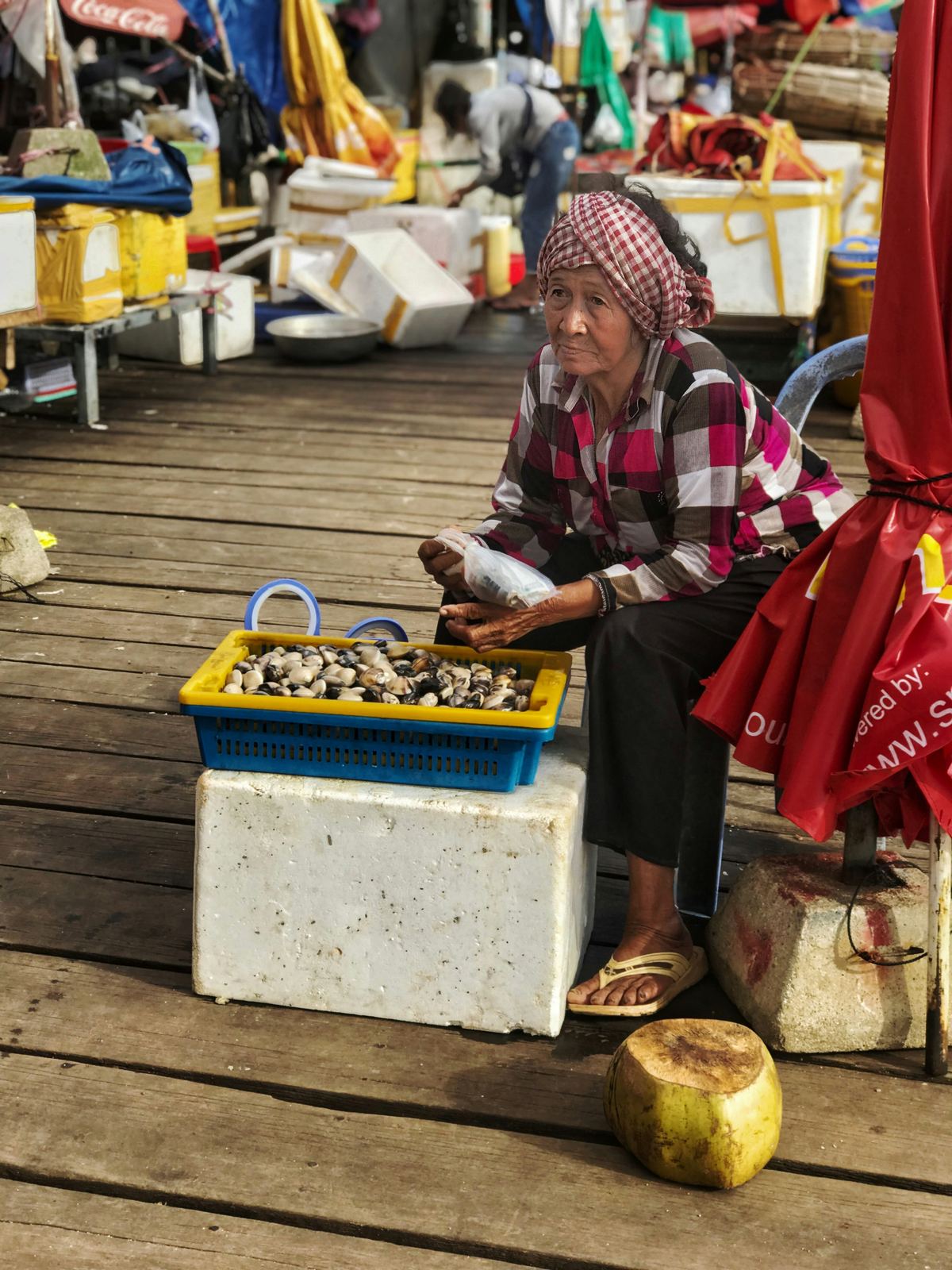
Kep market vendor Cambodia

The vendors at Kep's floating market have been here for generations

What Else to Do

Kep National Park

A forested hill behind the town with a 8km loop trail through the jungle. Well-marked, takes 2–3 hours, and completely free. The views over the Gulf of Thailand are worth the climb.

Rabbit Island — Koh Tonsay

A 20-minute boat ride ($7 return) gets you to Koh Tonsay, a small island with no cars, no Wi-Fi, a handful of bungalows, and one of those beaches that makes you reconsider your entire life plan. Day trips work; staying overnight is better.

The Ghost Villas

Walking or cycling around Kep's backroads at dusk, among the abandoned French villas, is one of the more memorable experiences in Cambodia. Most are on private land — look from the road. The Villa Kep and the old Governor's Residence are the most striking.

Before You Go

Distance from PP175 km · ~3h by bus
From Kampot25 km · ~30 min tuk-tuk
Bus PP→KepChampa Mekong · ~$8
Best seasonNov–Apr (dry season)
Budget/day$30–50 comfortable
Getting aroundMoto rental $8–12/day — no Grab
Rabbit Island boat$7 return · departs Kep beach
Crab meal budget$8–15 per person

Kep has no ATM that reliably works — bring cash USD from Kampot or Phnom Penh. The town is small enough to walk, but a rented moto gives you access to the national park trails and the villas scattered in the hills.

Come with time to waste. Kep rewards slowness.
← Retour à Khmer Side

Kep — La Ville Qui
Refusait de Se Presser

La plus petite province du Cambodge. Un marché aux crabes qui sent le poivre et la saumure. Des ruines coloniales lentement engloutées par la jungle. Le genre d'endroit où l'on vient pour une nuit et où l'on reste une semaine.

Kep se trouve sur la côte sud du Cambodge, à 25 kilomètres à l'est de Kampot et à 175 kilomètres de Phnom Penh. Environ trois heures en bus, deux en voiture privée. Et quand on arrive, on comprend immédiatement pourquoi ceux qui la découvrent regrettent rarement le détour.

La ville a été construite comme station balnéaire coloniale française en 1908, conçue comme lieu d'évasion pour l'élite de Phnom Penh. À son apogée, elle était bordée de villas élégantes. Puis les Khmers Rouges sont arrivés. Les villas ont été abandonnées, pillées, brûlées ou simplement laissées à la jungle. Ce qui reste aujourd'hui est l'un des paysages les plus étrangement beaux d'Asie du Sud-Est — des demeures fantômes drapées de ficus étrangleurs, de larges avenues qui ne mènent nulle part.

« Les ruines ne donnent pas ici l'impression d'une tragédie. Elles donnent l'impression que la jungle gagne, lentement, comme elle gagne toujours. »

Le Marché aux Crabes

C'est la raison pour laquelle la plupart des gens viennent à Kep, et il ne déçoit pas. Le marché aux crabes est une enfilade de restaurants flottants en bois construits sur pilotis au-dessus de la mer, tenus principalement par des femmes qui sont là depuis des décennies. On désigne les crabes — gardés vivants dans des cages immergées — on paie au kilo, et on les fait cuisiner à la demande.

La préparation classique est le crabe bleu sauté avec du poivre de Kampot frais, de l'ail et un filet de sauce de poisson. La combinaison est extraordinaire : la douceur du crabe frais contre la chaleur florale du poivre vert. Comptez $8–15 pour un repas complet avec riz et une Angkor fraîche.

Vendeuse marché de Kep Cambodge

Les vendeurs du marché flottant de Kep sont là depuis des générations

Que Faire d'Autre

Parc National de Kep

Une colline boisée derrière la ville avec une boucle de 8 km à travers la jungle. Bien balisée, 2–3 heures, entièrement gratuite. Les vues sur le Golfe de Thaïlande valent l'ascension.

L'Île aux Lapins — Koh Tonsay

20 minutes en bateau ($7 aller-retour) pour rejoindre Koh Tonsay, une petite île sans voitures, sans Wi-Fi, avec quelques bungalows et l'une de ces plages qui vous font reconsidérer votre vie entière. Les excursions d'une journée fonctionnent ; rester une nuit est encore mieux.

Les Villas Fantômes

Se promener ou faire du vélo au crépuscule parmi les villas françaises abandonnées de Kep est l'une des expériences les plus mémorables du Cambodge. La plupart sont sur des terrains privés — regardez depuis la route. La Villa Kep et l'ancienne Résidence du Gouverneur sont les plus saisissantes.

Avant de Partir

Distance de PP175 km · ~3h en bus
Depuis Kampot25 km · ~30 min tuk-tuk
Bus PP→KepChampa Mekong · ~$8
Meilleure saisonNov–Avr (saison sèche)
Budget/jour$30–50 confortable
DéplacementsMoto $8–12/jour — pas de Grab
Bateau Koh Tonsay$7 A/R · depuis la plage de Kep
Budget repas crabe$8–15 par personne

Kep n'a pas de DAB fiable — apportez des espèces USD depuis Kampot ou Phnom Penh. Venez avec du temps à perdre. Kep récompense la lenteur.

← Zurück zu Khmer Side

Kep — Die Stadt, Die Es
Nicht Eilig Hatte

Kambodschas kleinste Provinz. Ein Krabbenmarkt, der nach Pfeffer und Salzwasser riecht. Kolonialruinen, die langsam vom Dschungel verschluckt werden. Der Ort, an dem man für eine Nacht hinkommt und eine Woche bleibt.

Kep liegt an Kambodschas Südküste, 25 Kilometer östlich von Kampot und 175 Kilometer von Phnom Penh entfernt. Etwa drei Stunden mit dem Bus, zwei mit dem Privatwagen. Und wenn man ankommt, versteht man sofort, warum diejenigen, die es entdecken, den Umweg selten bereuen.

Die Stadt wurde 1908 als französischer Kolonialferienort gebaut. Dann kamen die Roten Khmer. Die Villen wurden verlassen, geplündert, verbrannt oder einfach dem Dschungel überlassen. Was heute bleibt, ist eine der eindringlichsten Landschaften Südostasiens — Geisterhäuser, umschlungen von Würgefeigen, breite Alleen, die nirgendwohin führen.

„Die Ruinen wirken hier nicht wie eine Tragödie. Sie wirken wie der Dschungel, der gewinnt — langsam, wie er immer gewinnt."

Der Krabbenmarkt

Deshalb kommen die meisten Menschen nach Kep — und er enttäuscht nicht. Der Krabbenmarkt ist eine Reihe von schwimmenden Holzrestaurants auf Stelzen über dem Meer, die meist von Frauen geführt werden, die seit Jahrzehnten hier sind. Man zeigt auf die Krabben, bezahlt pro Kilo, und sie werden auf Bestellung gekocht.

Die klassische Zubereitung: Blaue Krabbe mit frischem Kampot-Pfeffer, Knoblauch und Fischsauce gebraten. Die Kombination ist außergewöhnlich. Budget etwa $8–15 für eine vollständige Krabbenspeise mit Reis und einem kalten Angkor-Bier.

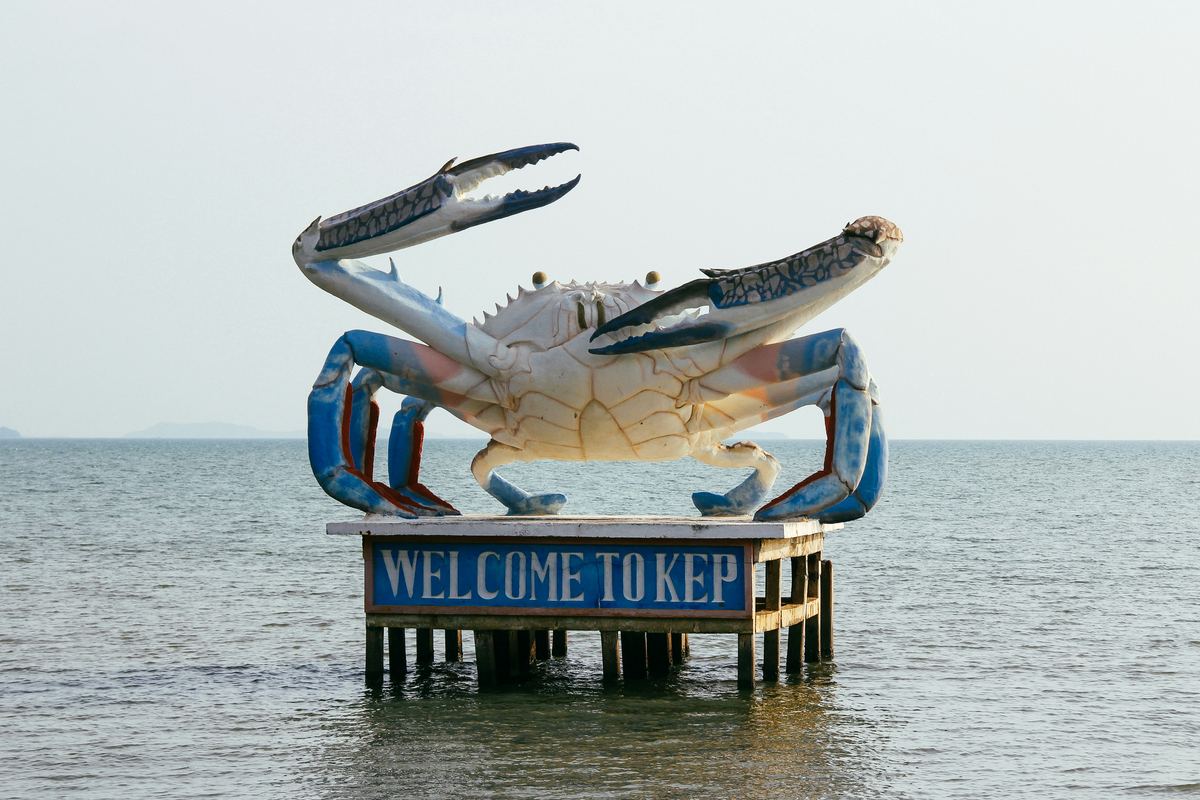
Kep Krabbe Statue Kambodscha

Die blaue Krabbe — Wahrzeichen und Versprechen von Kep

Was Sonst Noch Zu Tun Ist

Kep-Nationalpark

Ein bewaldeter Hügel hinter der Stadt mit einem 8 km langen Rundweg durch den Dschungel. Gut markiert, 2–3 Stunden, völlig kostenlos. Die Aussicht über den Golf von Thailand ist den Aufstieg wert.

Kaninchen-Insel — Koh Tonsay

20 Minuten Bootsfahrt ($7 Hin- und Rückfahrt) bringen Sie nach Koh Tonsay, einer kleinen Insel ohne Autos, ohne WLAN, mit ein paar Bungalows und einem jener Strände, die einen die eigenen Lebenspläne überdenken lassen.

Die Geistervillen

Bei Sonnenuntergang durch die verlassenen französischen Villen von Kep zu fahren ist eines der eindrucksvollsten Erlebnisse in Kambodscha. Die meisten befinden sich auf Privatgelände — schauen Sie von der Straße aus.

Vor der Reise

Entfernung von PP175 km · ~3h mit Bus
Von Kampot25 km · ~30 Min. Tuk-Tuk
Bus PP→KepChampa Mekong · ~$8
Beste ReisezeitNov–Apr (Trockenzeit)
Budget/Tag$30–50 komfortabel
FortbewegungMoto-Miete $8–12/Tag
Boot Koh Tonsay$7 Hin&Rück · ab Kep-Strand
Krabbenessen Budget$8–15 pro Person

Kep hat keinen zuverlässigen Geldautomaten — bringen Sie USD-Bargeld aus Kampot oder Phnom Penh mit. Kommen Sie mit Zeit zum Vertrödeln. Kep belohnt Langsamkeit.