Kampot — The Complete Guide
Kampot has Cambodia's best sunsets, its finest pepper, and the kind of riverfront that makes you cancel onward plans. This is the full guide — what to do, where to eat, where to sleep, and how to get there. With real prices, honest recommendations, and things to actually avoid.
The Town at a Glance
Kampot sits on the Praek Tuek Chhu river in southern Cambodia, about 150km from Phnom Penh and 25km from the coast at Kep. It's small enough to walk in an afternoon and interesting enough to fill three weeks without trying. The colonial-era riverfront, the pepper farms in the hills, the caves, Bokor Mountain looming above — Kampot is genuinely one of Southeast Asia's most underrated towns.
It attracts slow travellers, digital nomads, and expats who came for a week and never left. The vibe is relaxed to the point of being almost horizontal, but there's real substance underneath — good food, interesting people, and a landscape that rewards those who rent a moto and explore.
"You don't visit Kampot. You arrive, and then you stay longer than you planned."
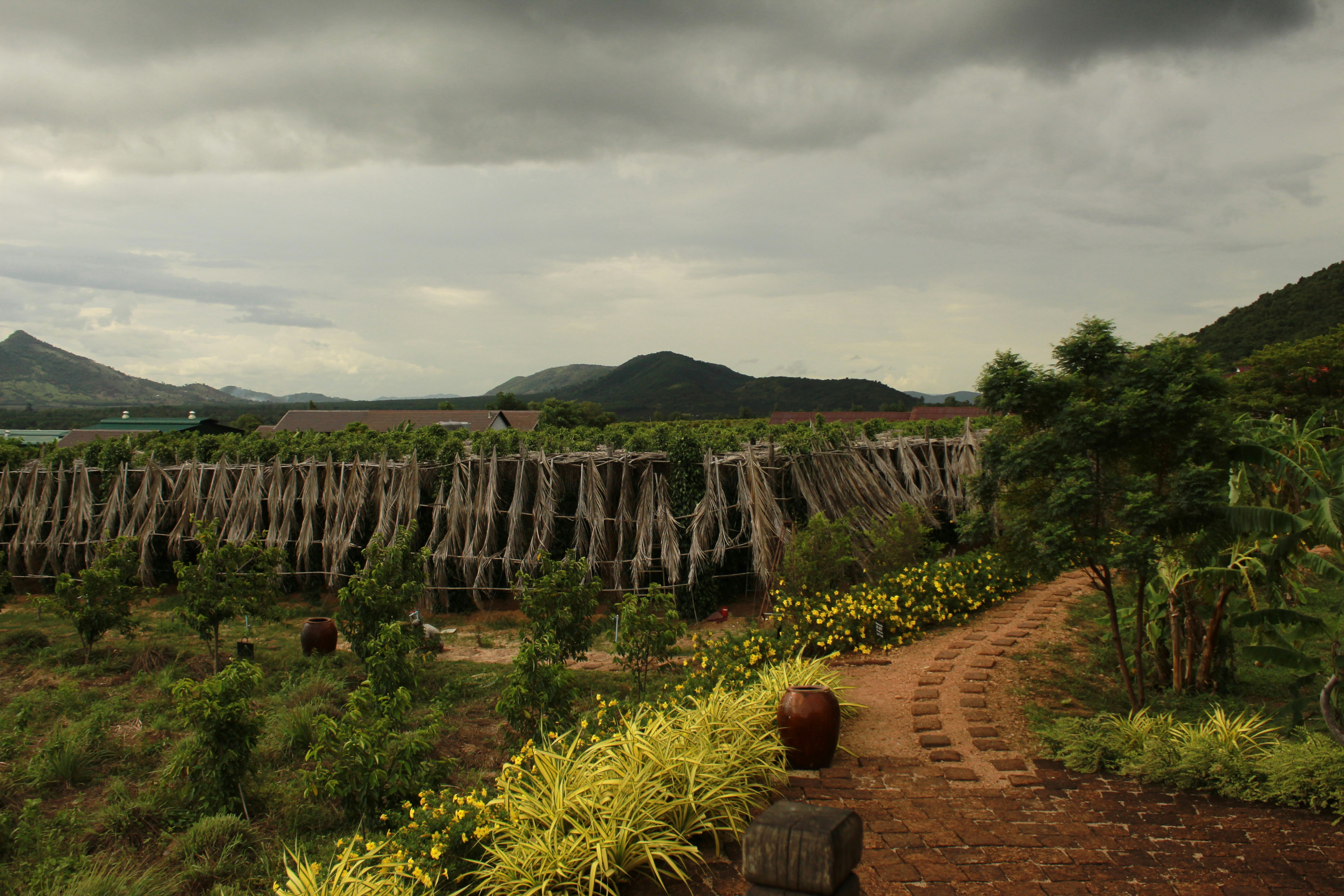
La Plantation — one of the world's finest pepper farms, just outside town
What to Do
La Plantation — Pepper Farm
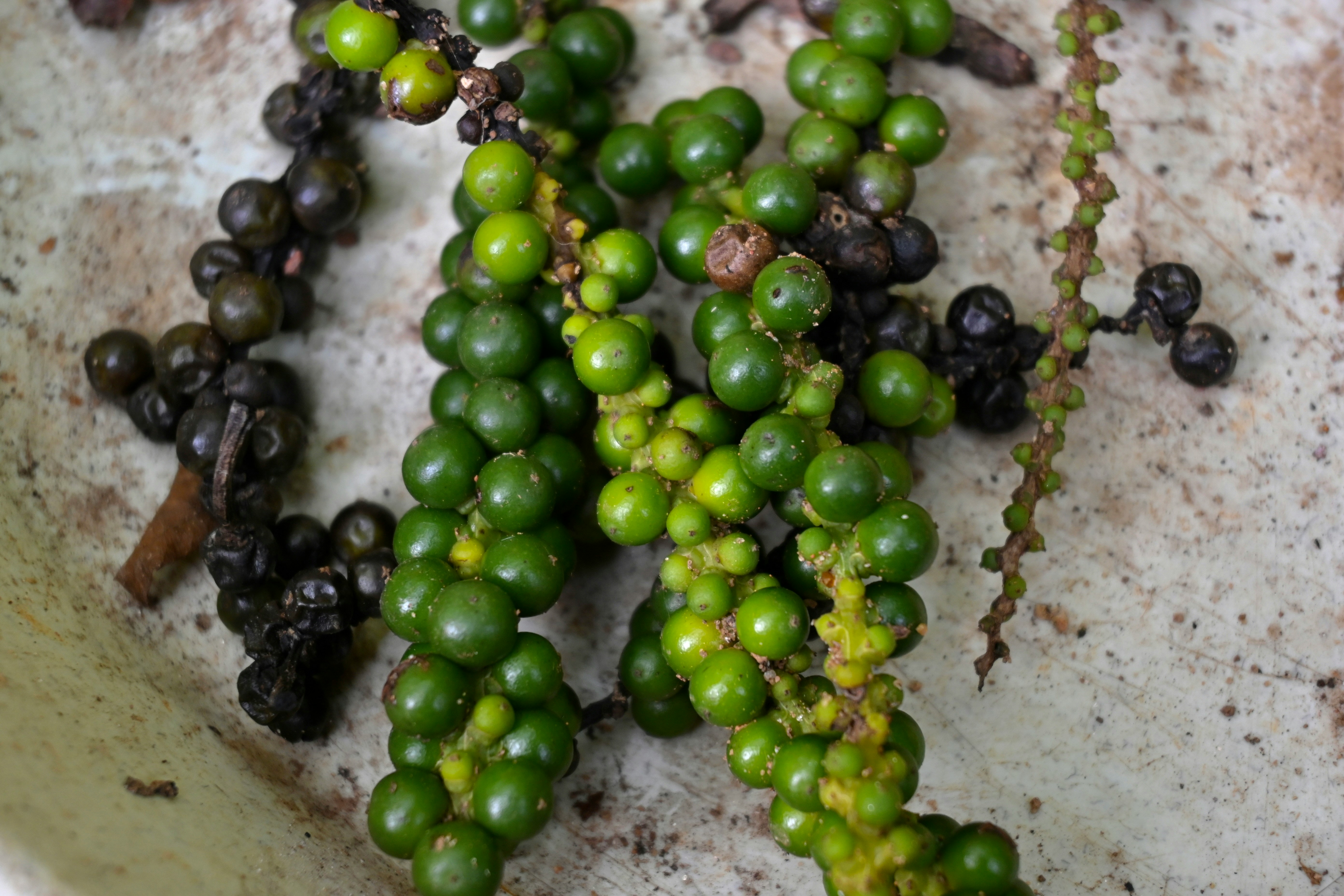
The essential Kampot experience. La Plantation is one of the world's most celebrated pepper farms, set in the foothills above town with views over the valley. You can tour the farm ($5/person), taste the different varieties — white, black, red, green — and buy direct at prices far better than anywhere in Phnom Penh. The on-site restaurant is good but pricey; eat in town instead.
Bokor Mountain & National Park
A 35km drive up a mountain road leads to the Bokor Hill Station — a ghost town of French colonial buildings abandoned in the 1940s, including the shell of the Bokor Palace Hotel, an old Catholic church, and a casino. The views over the Gulf of Thailand on a clear day are extraordinary. Entry to the national park is $5. Go on a moto or hire a tuk-tuk for the day ($15–20 return). The road is steep but paved.
Phnom Chhngok Cave Temple
A remarkable cave containing a 7th-century brick sanctuary to Shiva, about 8km from town. The cave itself is dramatic — a huge limestone chamber — and rarely crowded. Entry $2. Good for a half-morning combined with a bike ride through the salt fields on the way back.
Kayaking & River Activities
Kayaking the Kampot River through the mangroves is one of the better things you can do here. Most guesthouses rent kayaks at $3–5/hour, or you can book a guided sunset kayak tour ($12–18) that takes you through the green cathedral — a narrow mangrove channel that opens into the main river at dusk. Excellent.
Salt Fields
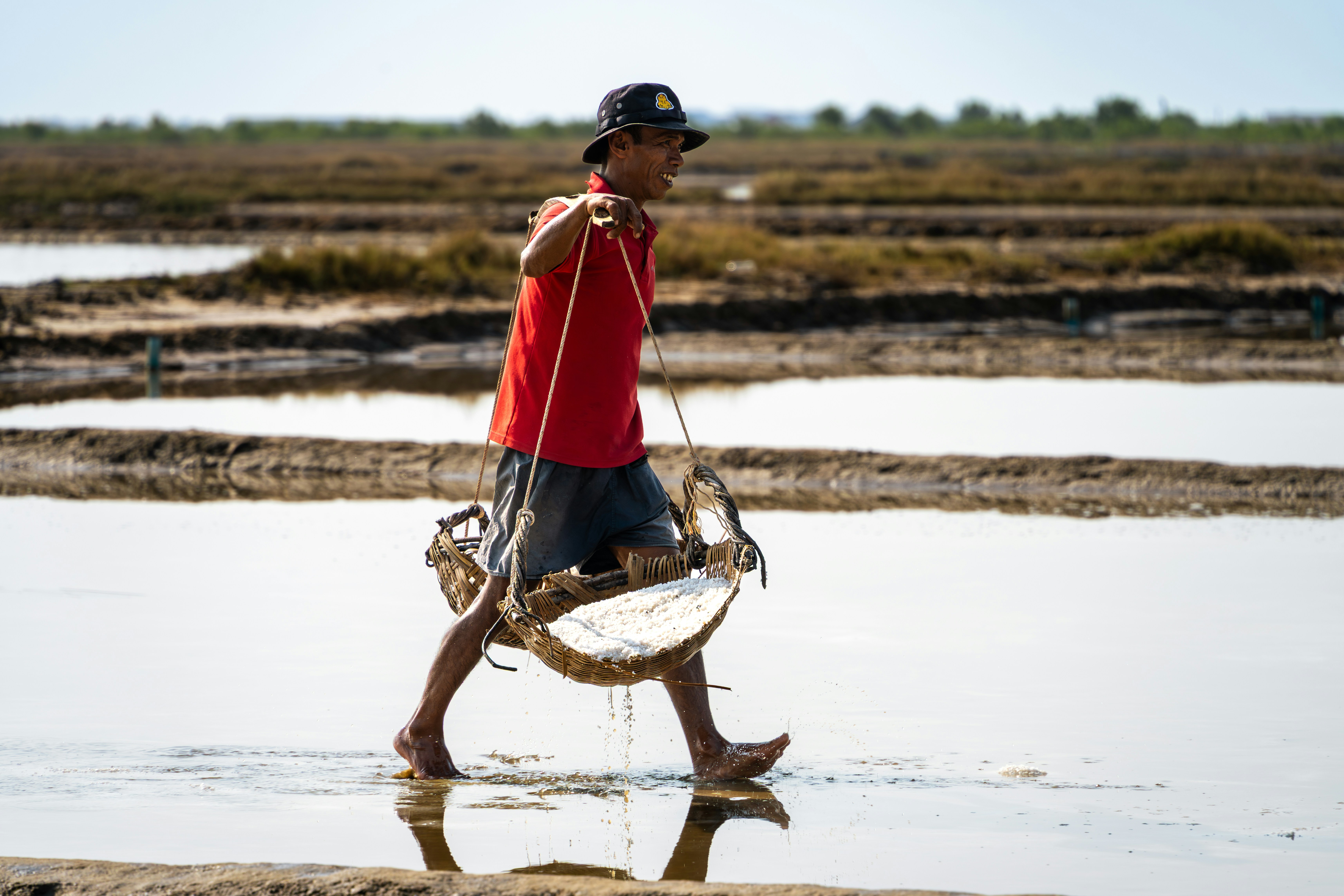
The salt flats between Kampot and Kep are particularly beautiful in the dry season (January–April) when workers harvest the salt with traditional baskets. Easy to access by bicycle or moto — no entry fee, no tour required. Just ride out and look.
Night Market
The Kampot Night Market runs along the riverfront every evening. Good for local street food — grilled corn, fresh fruit, lok lak, fried rice. Budget $3–6 for a full dinner. More local than touristic, which is the point.
Where to Eat & Drink
Kampot punches well above its weight for food. For such a small town, the range is remarkable — from excellent Khmer street food to fine riverside dining. Here's our honest, terrain-tested selection.
Upscale & Special Occasions
The finest dining experience in Kampot — and still genuinely affordable by any standard. Right on the riverfront downtown, Artisans serves beautifully executed Khmer and European dishes, with an exceptional use of Kampot pepper throughout the menu. The Kampot pepper sorbet is quite simply the best dessert in Cambodia. Full stop. Open 8am–9pm.
Mains $3.50–13 · Riverfront, downtownOne of the best restaurants in town — reliable, well-executed Khmer and European dishes with a beautiful atmosphere in the evenings. The kitchen does excellent things with fresh seafood and Kampot pepper. Also offers some of the most authentic cooking classes in Cambodia — hands-on, small groups, real recipes. Worth booking ahead.
Mains $5–12 · Cooking classes availableAuthentic Portuguese cuisine — Bulhão Pato clams, octopus salad, seafood cataplana, beef cheeks in red wine. Professionally plated. Feels genuinely out of place in a small Cambodian town, in the best sense. Book ahead in high season.
Mains $7.50–12.50 · Street 726Long-standing riverside institution. Good Khmer and Western menu, remarkable whisky selection, Illy coffee. Slightly above average for Kampot but the riverside setting earns it. Great for a long evening.
Mains $6–14 · Riverside RoadCasual & Local Favourites
Don't let the fast-food format fool you — Aroma serves seriously good Middle Eastern food. Kebabs, shawarma, falafel wraps, hummus. Honest, generous portions at very fair prices. One of those places that surprises everyone who walks in dismissively and leaves a convert. Great for lunch.
Mains $3–7Arguably the best coffee in Cambodia. House-roasted regional beans, full espresso menu, pour-overs, siphon, Aeropress. Outstanding breakfast and lunch. "Sorry, we don't serve regular coffee."
Coffee $2–4 · Breakfast $4–7Run by a UK NGO employing deaf and disabled Cambodians. Excellent breakfasts, good coffee, warm atmosphere. One of the best reasons to eat breakfast in Kampot.
Breakfast $3–6 · Lunch $4–8Reliable, cheap, genuinely good Khmer food. Curry and rice at $3.40, fish amok, lok lak. No frills, no pretension. Best-value meal in town.
Mains $3–6The cocktail bar of Kampot's expat community. Good negronis, Manhattans. Open from 5:30pm. Nice terrace. More for civilised sundowners than late nights.
Cocktails $4–7 · Open 17h30–22h30🍳 Cooking Classes
The cooking classes at Kampot Seafood & Pepper are among the most authentic in Cambodia — small groups, real techniques, proper Khmer recipes using fresh local ingredients including Kampot pepper. Highly recommended for anyone wanting to understand the local cuisine beyond the plate. Book directly at the restaurant.
Where to Sleep
Kampot has options across all budgets and travel styles — backpackers, couples, families. Here's an honest breakdown by category.
For Families
The top family resort in the Kampot area, about 5km from the town centre on the riverfront with views of the Damrei Mountains. Exceptional facilities: free water park, 2 outdoor pools, indoor tennis court, basketball, kayaks, free bikes, playground, sauna, 2 restaurants. Spacious grounds with lush greenery, rice fields and mangroves. Staff consistently praised for friendliness. One of the best family resorts in southern Cambodia.
From $50–90/night · 5km from centreBoutique & Mid-Range
A converted row of French colonial shophouses — high ceilings, tasteful design, neo-Mediterranean feel. The most polished hotel in Kampot proper. Central location, excellent breakfast.
From $65/nightRooms above the excellent restaurant, right on the river. Atmospheric, well-run. Book well in advance in high season.
From $45/nightGood value resort outside the centre. Pool, spa, relaxed grounds. Popular with couples wanting comfort without the price tag.
From $16–30/nightClassic Kampot riverside bungalows — some garden-facing, some right over the water with private decks. Unpretentious, good value, social atmosphere. A Kampot institution.
From $12–25/nightBudget & Backpacker
The most social hostel in town. Pool, bar, regular events, lively crowd. If you want to meet people and don't need quiet, this is the place. Dorms and private rooms available.
Dorms from $5 · Privates from $15Slightly calmer alternative to Mad Monkey. Pool, bar, good common areas. Solid choice for budget travellers who want a social base without the full party scene.
Dorms from $5 · Privates from $15No-frills backpacker hostel in the town centre. Clean, cheap, friendly. Good base for those who want to spend their money on activities rather than accommodation.
Dorms from $5 · Privates from $12Getting There & Practical Info
Suggested Itineraries
If you have 1 day
Coffee at Kampot Espresso. Bicycle to the salt fields (30 min ride). Stop at Phnom Chhngok cave temple on the way back.
Lunch at Lemongrass Bistro. Wander the colonial centre. Late afternoon kayak on the river (sunset kayak tour if available).
Sundowner at Baraca. Dinner at Rikitikitavi or Tertúlia. Night market for dessert.
If you have 3 days
As above. Get settled, explore on foot, evening at the riverfront.
Full day up the mountain. Leave early (before 9am) to avoid clouds. Pack a jacket — it's cold at the top. Lunch at the summit, back by late afternoon. Dinner at Simon's Tandoor.
Morning tour of La Plantation pepper farm. Afternoon drive to Kep for blue crab lunch at the Crab Market. Back to Kampot for sunset.