← Back to Khmer Side
Why Angkor Is Unlike Anything Else
The numbers are almost meaningless until you're standing in front of it. Angkor Wat is 162 hectares. The entire Angkor Archaeological Park covers over 400 square kilometres. At its peak in the 12th century, the Khmer Empire's capital was home to perhaps a million people — making it the largest pre-industrial city on Earth. The Western world's biggest cities at the time were a fraction of the size.
What the Khmer left behind isn't just a temple. It's an entire civilisation frozen in stone — palace cities, water systems, libraries, hospitals, universities — all slowly being reclaimed by the jungle. Angkor Wat, Bayon, Ta Prohm, Banteay Srei: these aren't four tourist attractions. They're four very different answers to the question of what human beings can build when they really commit to it.
And then there's the mystery. The Khmer Empire didn't decline gradually. It collapsed — over a remarkably short period in the 15th century, the capital was abandoned, the jungle moved in, and the whole thing was essentially forgotten by the outside world until a French naturalist stumbled across it in 1860. Nobody fully understands why.
"Angkor Wat takes most people's breath away twice — once when they first see it, and once when they realise how much of it they're not seeing."
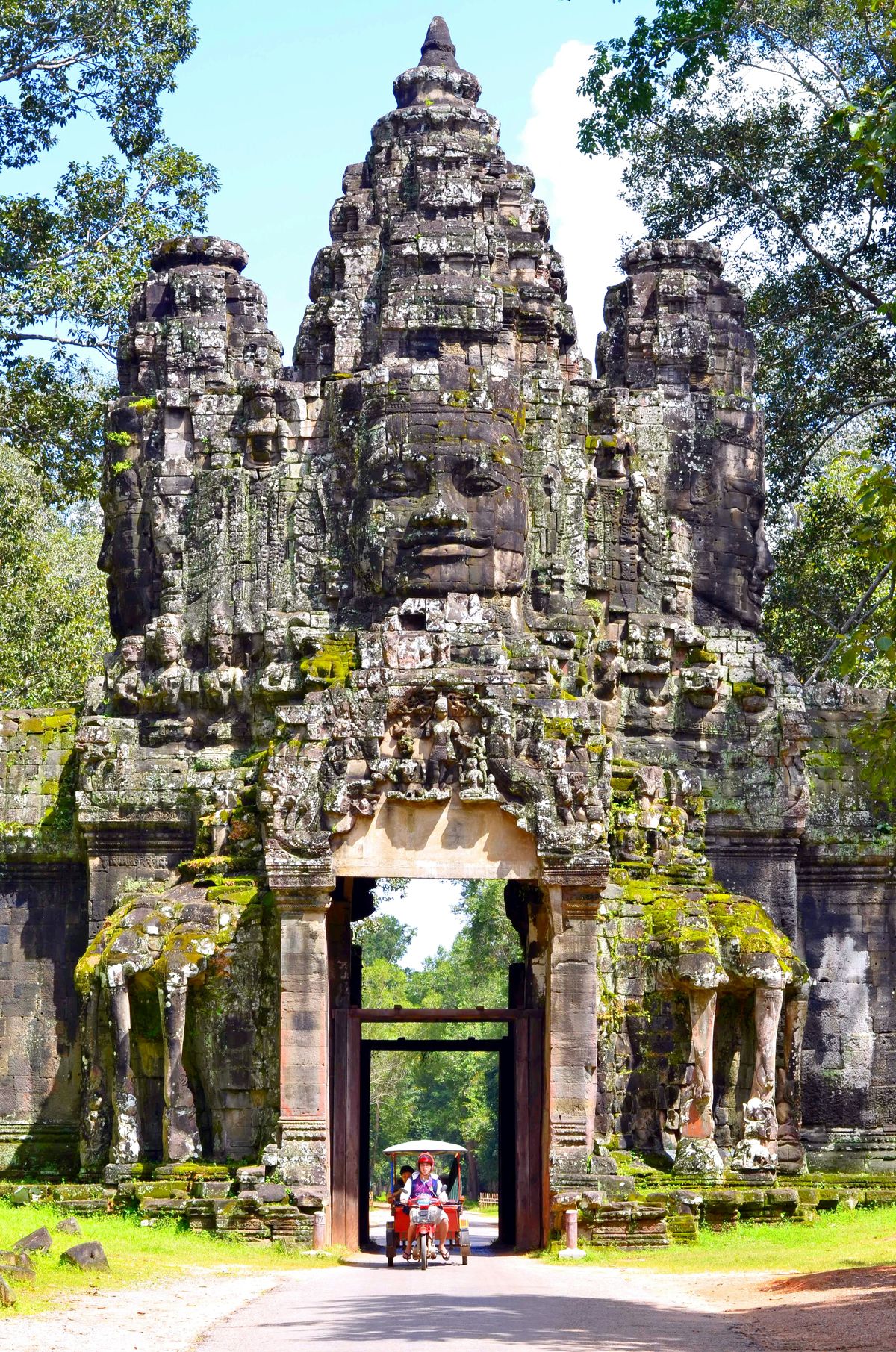
The South Gate of Angkor Thom — you enter through the face of a god
Tickets — Prices & The Sunset Trick
All tickets are managed by Angkor Enterprise. In 2026, prices are unchanged from 2023:
$37
1-Day Pass
One calendar day. Covers all temples in the main park.
$62
3-Day Pass
Any 3 days within 10 days. Best value for most visitors.
Best value
$72
7-Day Pass
Any 7 days within 30 days. For serious explorers.
Note: $2 per ticket goes to a children's hospital in Siem Reap. Children under 12 free with passport. Koh Ker ($15) and Phnom Kulen ($20) need separate tickets.
🌅 The Sunset Trick — Free Bonus Entry
Buy your pass after 4:45 PM and get a free sunset entry that same evening — head to Phnom Bakheng or Pre Rup for golden hour, then start your full pass the next day. Effectively a free half-day of extra access.
📱 Buy Online
Purchase at angkorenterprise.gov.kh — skip 30–45 minutes of queue, essential for 5am sunrise visits. You'll receive a QR code scanned at each checkpoint.
The Temples — What to See
The Big Three — Non-Negotiable
01
Angkor Wat
Unmissable12th centuryUNESCO
The world's largest religious monument. Three levels of galleries with 800 metres of bas-relief carvings depicting Hindu epics and historical battles. The western-facing orientation is unique among Khmer temples. Allow at least 3 hours. Visit twice if you can: once at sunrise, once at 4pm for golden light without the crowds.
⏰ Best at: 5:30am sunrise / 4pm golden hour with far fewer people
02
Bayon — The Face Temple
UnmissableLate 12th centuryAngkor Thom
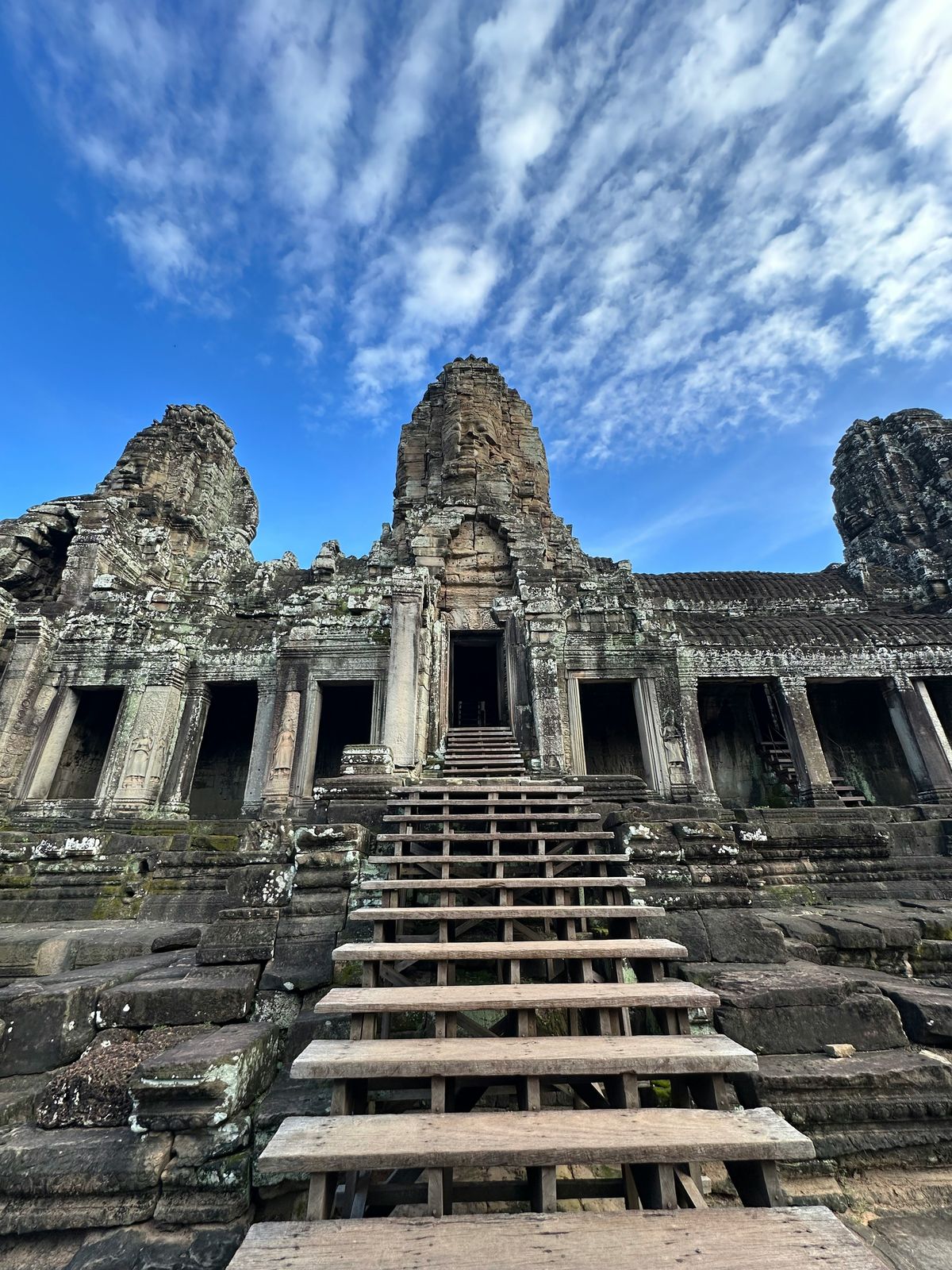
54 towers bearing 216 enormous stone faces, each wearing the same serene, slightly mysterious smile. Nobody is entirely sure whose face it is — Buddha, or King Jayavarman VII? Walking among the faces as morning light shifts across them is one of Angkor's genuinely extraordinary experiences. Don't rush it.
⏰ Best at: 7am for soft morning light — avoid 10am–1pm peak crowds and heat
03
Ta Prohm — The Jungle Temple
Unmissable12th centuryTomb Raider
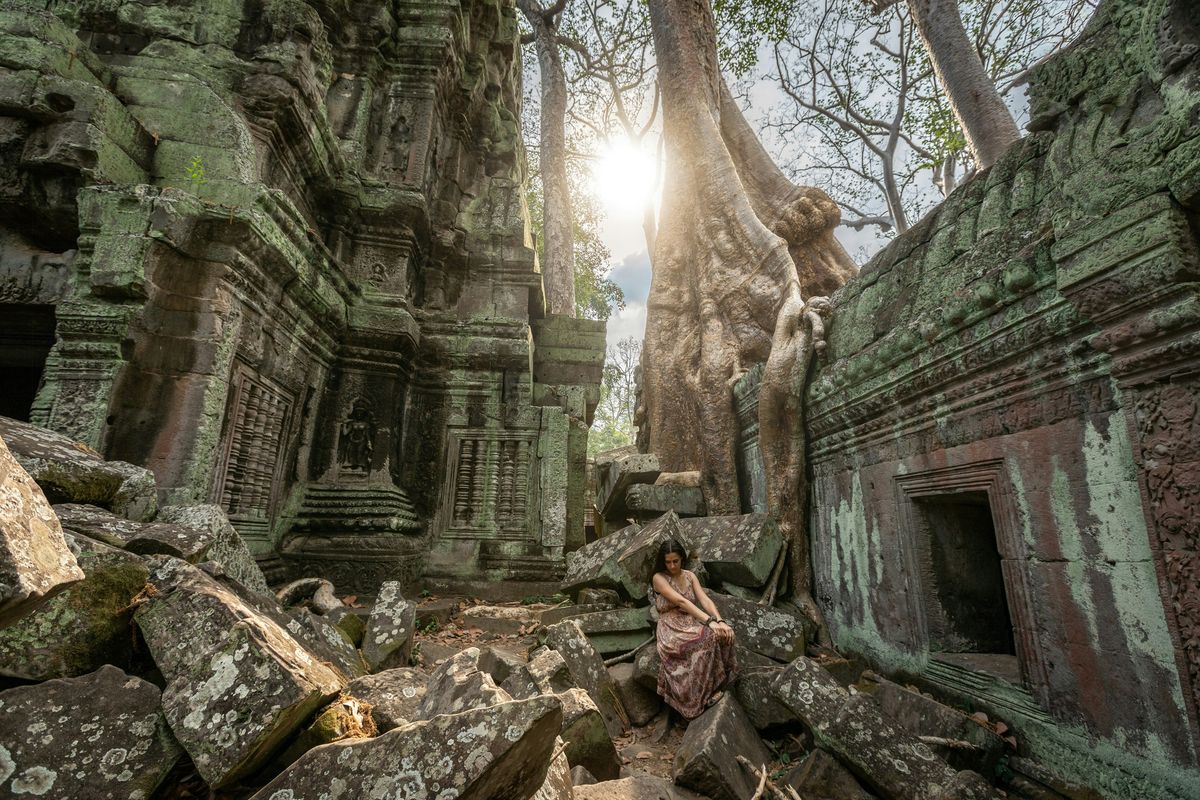
Left deliberately unrestored — massive strangler figs and silk-cotton trees erupt through galleries, roots wrapped around stone walls like slow-motion destruction. The most photogenic and most crowded temple in the park. Go at 6am before the tour groups, or after 3pm when they leave. At peak time it's a gridlock of selfie sticks.
⏰ Best at: 6am (empty) or after 3pm — avoid 9am–2pm entirely
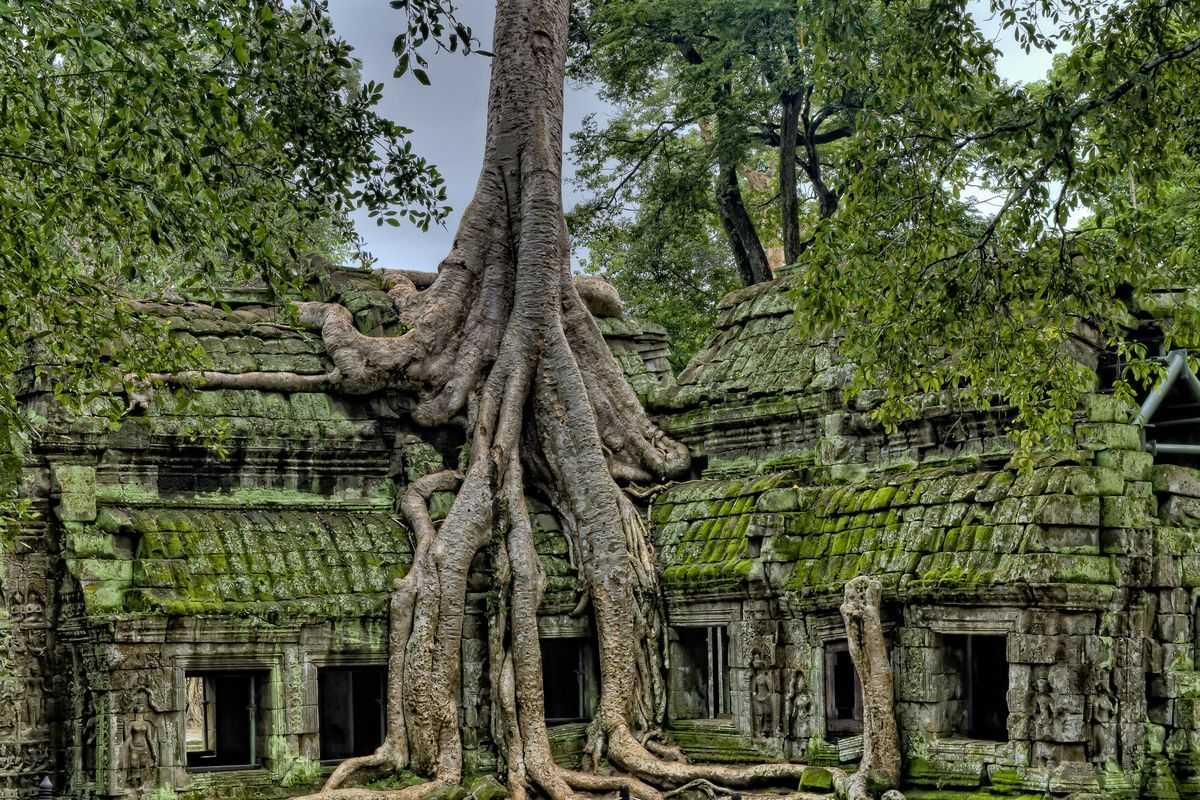
Ta Prohm — where the jungle decided not to wait
Essential Additions
04
Banteay Srei — Citadel of the Women
Hidden gem10th centuryPink sandstone
25km north — worth every kilometre. The most intricately carved temple in the complex, built from pink sandstone covered in decorative detail so fine it looks like lace. Art historian George Coedès called it "a precious jewel of Khmer art." Smaller than Angkor Wat but the craftsmanship makes everything else look rough by comparison.
⏰ Separate half-day trip · 25km from main park · go early morning
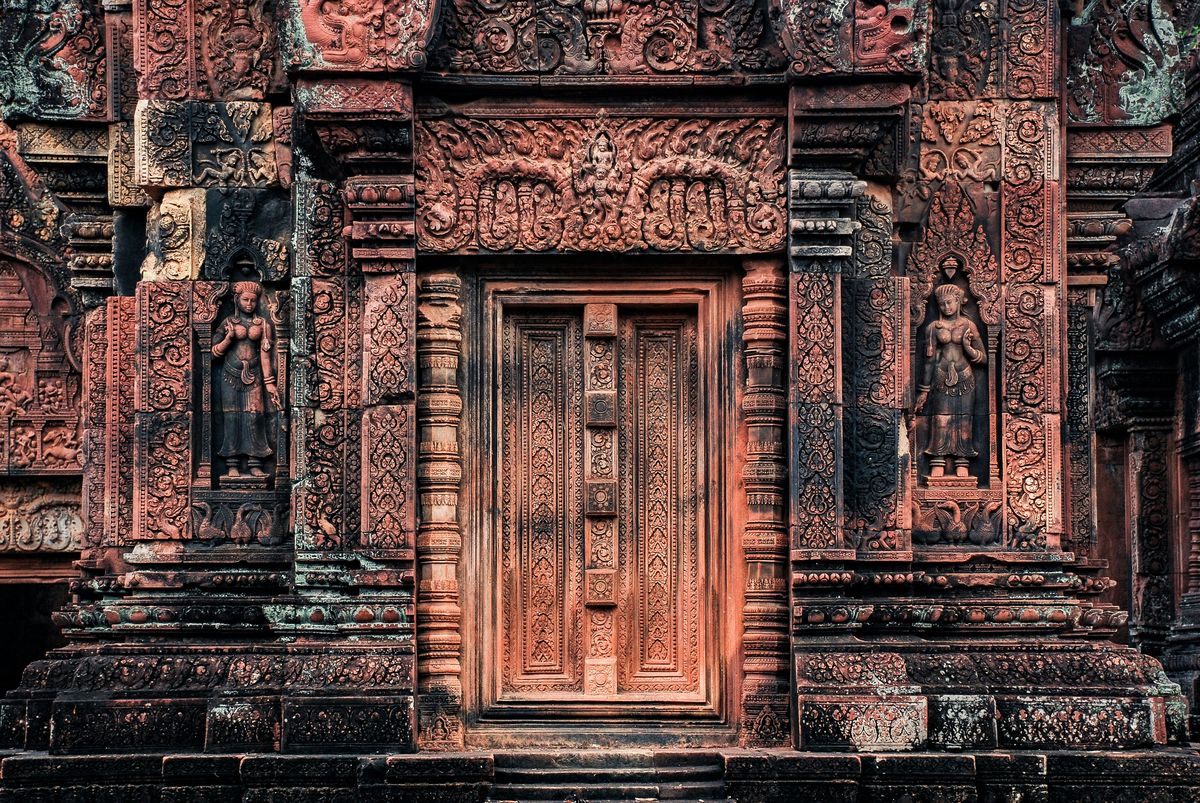
Banteay Srei — every centimetre carved by hand. Nothing else at Angkor comes close.
05
Preah Khan — The City Temple
12th centuryLess crowdedAtmospheric
Once a Buddhist university and city in its own right — over 100,000 people may have lived here. Long atmospheric corridors, light filtering through broken stonework, far fewer tourists than the Big Three. If you want Angkor's atmosphere without its crowds, Preah Khan delivers it more reliably than anywhere else.
⏰ Grand Circuit · relatively uncrowded even at midday
06
Beng Mealea — The Adventure Temple
Off the beaten path65km from Siem ReapUnrestored
65km east — a largely unrestored 12th-century temple the jungle has thoroughly won. Wooden walkways wind through collapsed stone galleries, fallen towers, roots that have pulled walls apart over centuries. No polished restoration, no clear pathways, no crowds. It feels like genuine discovery. Worth the journey.
⏰ $10 separate ticket · 1.5h drive · best combined with Banteay Srei
07
Phnom Bakheng — Sunset Viewpoint
9th centurySunsetCapacity limited
The classic Angkor sunset viewpoint — a hilltop temple with views over the forest canopy toward Angkor Wat. Access is limited to 300 people at a time. Arrive 90 minutes before sunset minimum. The climb takes 20 minutes each way. On a clear evening, the view is spectacular.
⏰ Max 300 people · arrive 90min before sunset to guarantee entry
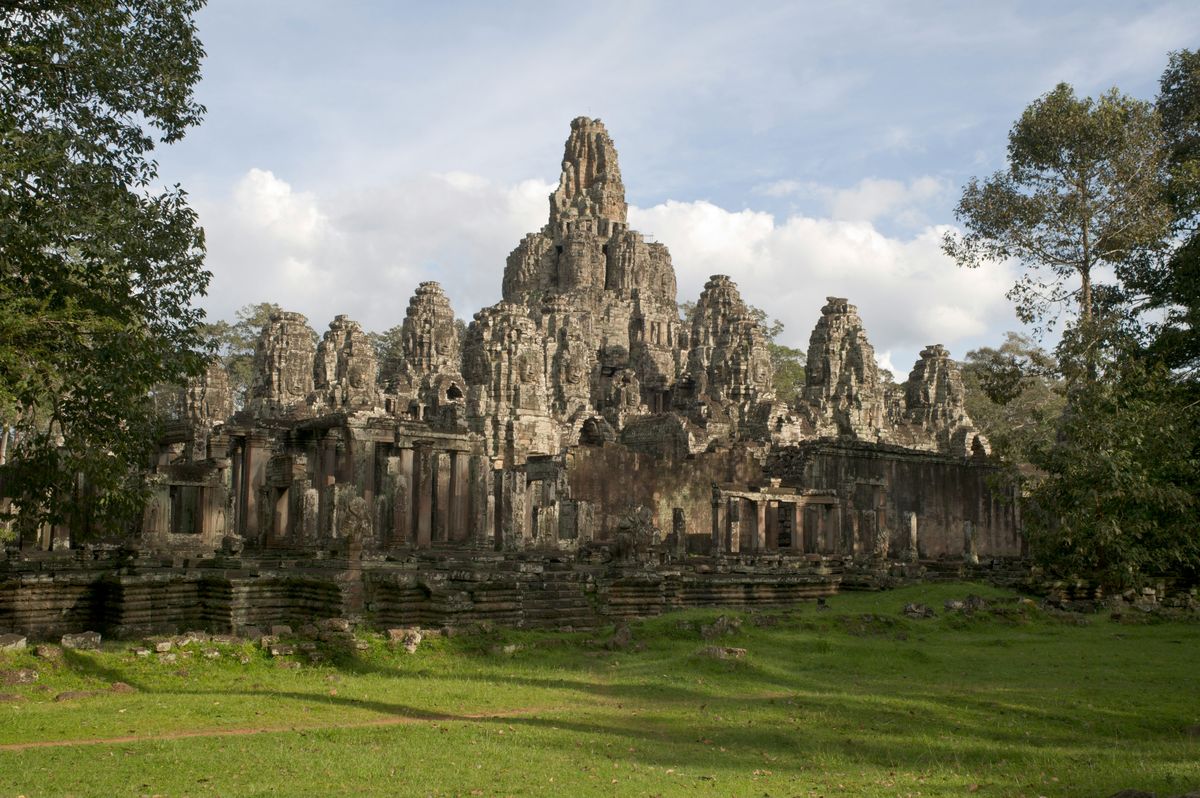
Bayon from the outside — 54 towers, 216 faces, one unanswerable question
The Circuits Explained
Small Circuit — 17km Loop
The essentials: Angkor Wat → South Gate of Angkor Thom → Bayon → Baphuon → Terrace of the Elephants → Terrace of the Leper King → Ta Prohm → Ta Keo → Banteay Kdei. The right circuit for a first day or a one-day visit. Starts and ends at the main ticket gate.
Tuk-tuk $15–20/day · E-bike $8–15/day · Bicycle $3–5 (tough but doable for the Small Circuit)
Grand Circuit — 26km Loop
Extends beyond the Small Circuit to include Preah Khan, Neak Pean (floating island temple), Ta Som, Eastern Mebon, Pre Rup and others. Best done on a second day. Fewer crowds throughout.
Tuk-tuk $25–30/day · Private car with AC $35–50 (recommended March–May when temps hit 40°C)
Outer Temples — Half or Full Days
Banteay Srei (25km north, no extra ticket), Beng Mealea (65km east, $10), Koh Ker (120km northeast, $15), Phnom Kulen (48km, $20). Require separate transport and separate tickets for Koh Ker and Phnom Kulen.
Private car recommended · $50–80 for full-day car + driver to outer temples
Sunrise — The Truth About the 4am Alarm
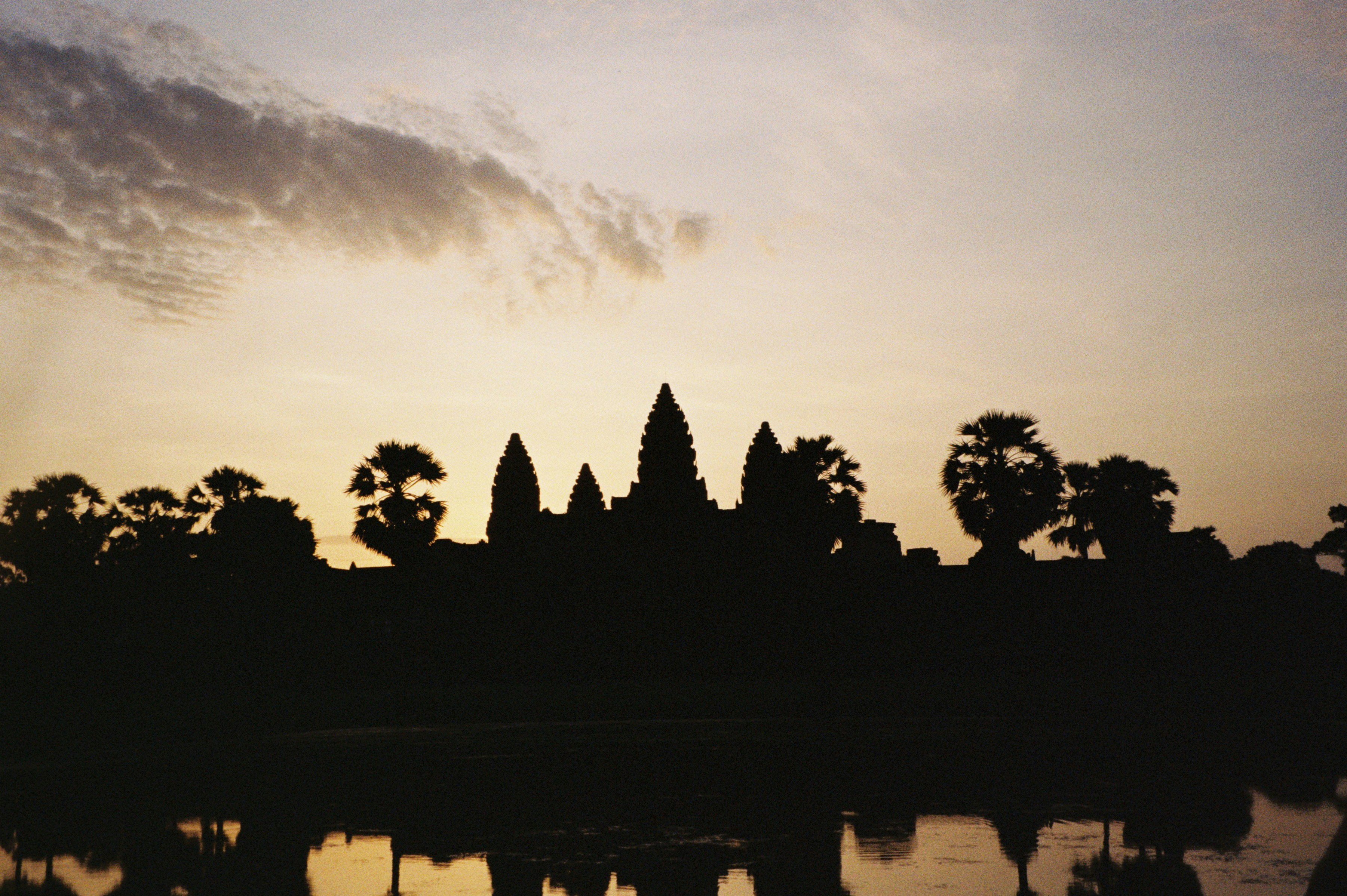
The Angkor Wat sunrise is one of the most photographed events in Asia. On a clear morning, watching the sun rise behind the five towers — reflected in the lotus ponds if you position yourself right — is genuinely one of the great travel experiences on Earth. Yes, do it. But some honest advice:
It's crowded. In peak season (November–February), 2,000+ people watch simultaneously. The lotus pond viewpoints fill by 5:15am. For the iconic reflection shot, arrive by 5am at the latest — and you'll still be elbow-to-elbow.
Best sunrise spots: Northwest corner of the outer moat for the reflection shot with fewer people. The inner gallery's second-floor corridors offer a completely different angle as light fills the courtyards.
The alternative: Angkor Wat at 4pm. Light equally beautiful. Crowds a third of morning size. No 4am alarm required.
💡 The Insider Move
Buy ticket after 4:45pm the evening before → free sunset at Phnom Bakheng. Next morning: Angkor Wat at 5am for sunrise. You've gotten a sunset AND sunrise for the price of one — or your 3-day pass starts the following day.
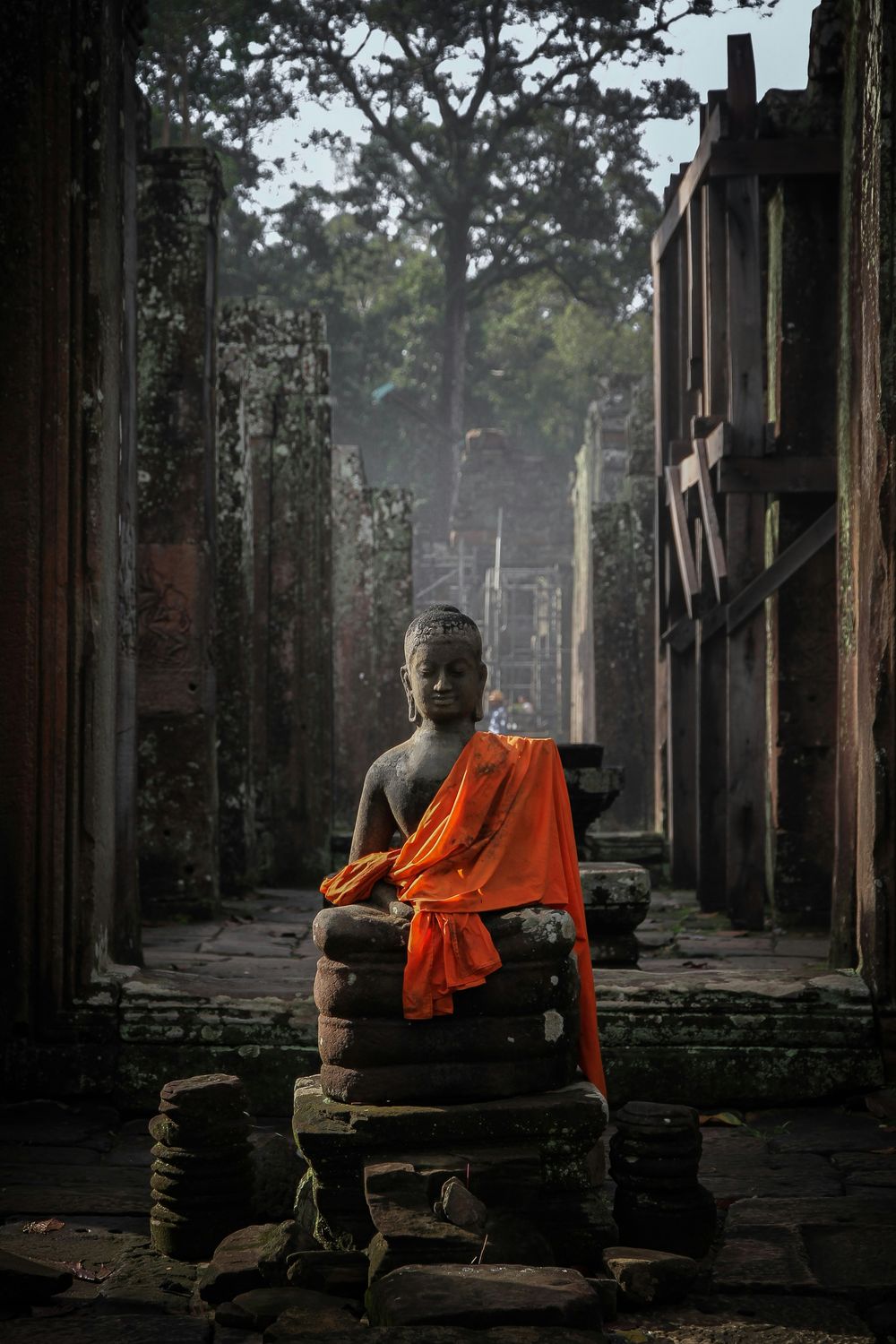
A monk's robe draped over an 800-year-old Buddha — Angkor as it still is today
Essential Tips & What to Avoid
What to wear
Angkor Wat is an active religious site. Both men and women must cover shoulders and knees — no shorts, no tank tops, no sleeveless tops. Long lightweight trousers and a loose shirt. Bring a sarong as backup. Security will turn you back if underdressed.
What to bring
Water (1 litre per hour in hot weather), sunscreen, hat, comfortable shoes. Small USD bills for drinks and tips. Restaurants inside the park are overpriced and mediocre — eat in town.
What to avoid
Climbing on structures (prohibited throughout). Flash photography inside temples. Drones (require special permission). "Orphanage tours" — a well-documented form of exploitation. The brutally early 4am rush if you don't handle crowds well — 4pm golden hour is equally beautiful at a fraction of the crowd size.
Itineraries
1 Day — The Essentials
5:00amAngkor Wat sunrise. Northwest corner of the moat for the reflection shot. Stay until 7am as the light builds.
7:30amEnter Angkor Wat itself — galleries cool and nearly empty this early. Three levels, bas-reliefs, inner sanctuary. Allow 2 hours.
10:00amAngkor Thom. South Gate, then Bayon — minimum 90 minutes with the faces. Terrace of the Elephants if time allows.
12:30pmLunch break. Rest during peak heat (midday–2pm). Non-optional in hot season.
2:30pmTa Prohm — tree roots and jungle atmosphere. 90 minutes.
4:30pmReturn to Angkor Wat for golden hour. Completely different light, dramatically fewer people.
3 Days — The Full Experience
Day 0 eveningBuy 3-day pass after 4:45pm → free sunset at Phnom Bakheng. Pass starts the next day.
Day 1 — Small Circuit5am sunrise at Angkor Wat. Morning: Bayon, Baphuon, Terrace of the Elephants. Afternoon: Ta Prohm, Ta Keo. Golden hour back at Angkor Wat.
Day 2 — Grand CircuitMorning: Preah Khan (atmospheric, uncrowded). Midday break. Afternoon: Neak Pean, Ta Som, Eastern Mebon, Pre Rup for sunset. This is where Angkor's scale reveals itself.
Day 3 — Outer TemplesEarly departure for Banteay Srei — the pink sandstone jewel. Combine with Beng Mealea ($10 extra) if budget allows. Back to Siem Reap by late afternoon. Evening: Phare Circus.
Practical Info
Park hours5am–6pm daily · ticket office opens 5am
Best seasonNov–Feb (cool, dry) · Jun–Sep (green, fewer crowds, cheaper)
Worst timeMar–May: 38–40°C · go very early or rent a car
Getting there8km from Siem Reap · $3–5 Grab tuk-tuk or hotel arrangement
Buy ticketsangkorenterprise.gov.kh or booth on Apsara Road
Under 12sFree with passport as proof of age